
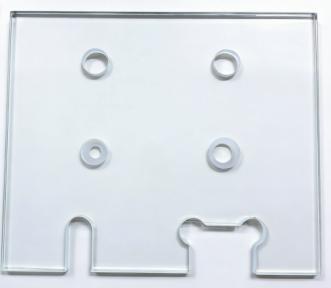
Introduction
In the busy world of glass deep-processing, accuracy and speed stand as key supports for staying in business. Fields such as electronics, building design, and renewable energy sources call for more detailed glass parts. Old mechanical ways of working reach their natural bounds. The addition of glass laser processing technology to work lines marks a big change in drilling glass. It moves the focus from touch-based methods to exact light-based work.
What is Infrared Laser Glass Processing Technology
Infrared laser technology makes use of the extended wavelengths in the light range. It also draws on its special ways of working with glass. To see why it stands out, consider three main points.
- The Science of Infrared Lasers:Short-wave lasers act differently. Infrared ones link with the tiny build of glass through heat uptake in set spots. High-power light focuses on one point. This removes material by local steam turn or careful heat strain control.
- Non-Contact Processing Benefits:The top gain comes from the “no-touch” side of the work. Old drills depend on push force. That always leads to mechanical strain. Laser methods cut this strain out. As a result, the chance of tiny cracks and sudden breaks drops a lot during drilling. This keeps material waste low.
- A Technological Leap:This shift goes from mechanical gear to light-based exact work. Makers add new laser tips to CNC-run beam centers. Such a setup brings fine detail and repeat ability that diamond ends could not reach before.
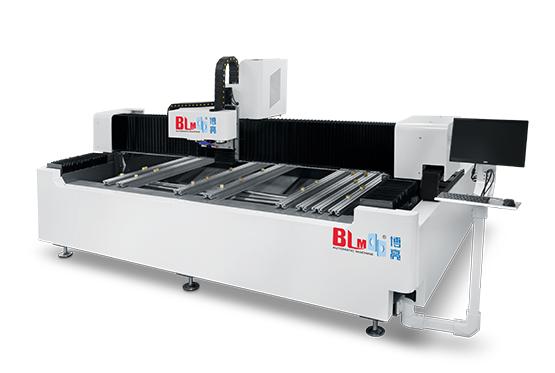
How does laser drilling improve glass processing efficiency?
The main plus of laser drilling glass lies in clearing the stops found in old machines. See below how it changes the work area.
Eliminating Tool Wear and Maintenance
- Zero Physical Friction: Old CNC drilling units use real bits that wear down per hole. Even with forward 8-to-24-bit tool sets, stop time for swaps happens often.
- Continuous Operation: Laser work skips physical touch. So, no tool wear occurs. This lets the line run non-stop, day and night, without tool swaps or reset needs. In turn, the output stays at full power.
Seamless Automation and Multi-Station Synergy
- “Second-Level”Opening: When added to full auto lines, infrared laser gear hits “second-level” hole starts.
- High-Speed Throughput: Units such as the dual-spindle Furniture, Automotive glass drilling can take laser tips. This fits multi-spot drilling. The pair-up lets many points work at once. It meets the big needs of the car and home gear fields.
Digital Flexibility and Geometric Freedom
- Online Drawing Integration:Laser methods back online plans and bendy paths. No custom tools needed for tricky shapes.
- Handling Heteromorphic Shapes:Needs may call for plain round holes, tiny gaps, or odd, irregular forms. The laser tracks the digital line with micron exactness. This gives planners new levels of choice.
Comparison: Traditional CNC vs. Infrared Laser Drilling
|
Feature |
Traditional CNC Drilling |
Infrared Laser Drilling(eg,. |
|
Tooling Requirement |
Requires 8-24 physical drill bits |
No physical tools (Optical beam) |
|
Tool Wear |
High; requires frequent replacement |
None; consistent performance |
|
Processing Speed |
Limited by mechanical feed rates |
High-speed vaporization; “Second-level” |
|
Stress Factors |
Mechanical & Thermal stress |
Minimal thermal stress; Non-contact |
|
Geometric Limit |
Mostly circular; limited shapes |
Any shape via CAD/Online drawing |
|
Post-Processing |
Requires edge polishing/grinding |
Minimal HAZ; often no grinding needed |
How Does Infrared Laser Improve Glass Processing Quality?
Laser methods go past speed alone. They boost the build strength and look of the end glass in basic ways.
- Precise Control of the Heat Affected Zone (HAZ):
Heat work often worries about the side effects. But new infrared lasers let fine tune of settings. Energy stays in a very small spot. The gear cuts the Heat Affected Zone (HAZ) down. This stops side breaks. It also keeps the glass’s heat-treated properties and builds soundness. - Superior Surface and Wall Finish:
Holes from mechanical drills leave rough, dull sides that need extra grind work. Laser-drilled holes have much smoother walls. Lower side roughness helps the look quality. This matters for top electronics. It also cuts spots where strain builds, which can cause breaks later. - Micro-Aperture and Thin Glass Capability:
In electronics, glass gets slimmer, like in screen parts. Old drilling proves too rough there. Laser methods shine at tiny drilling on slim bases. Strong builds and new control steps keep the light steady over the full run.
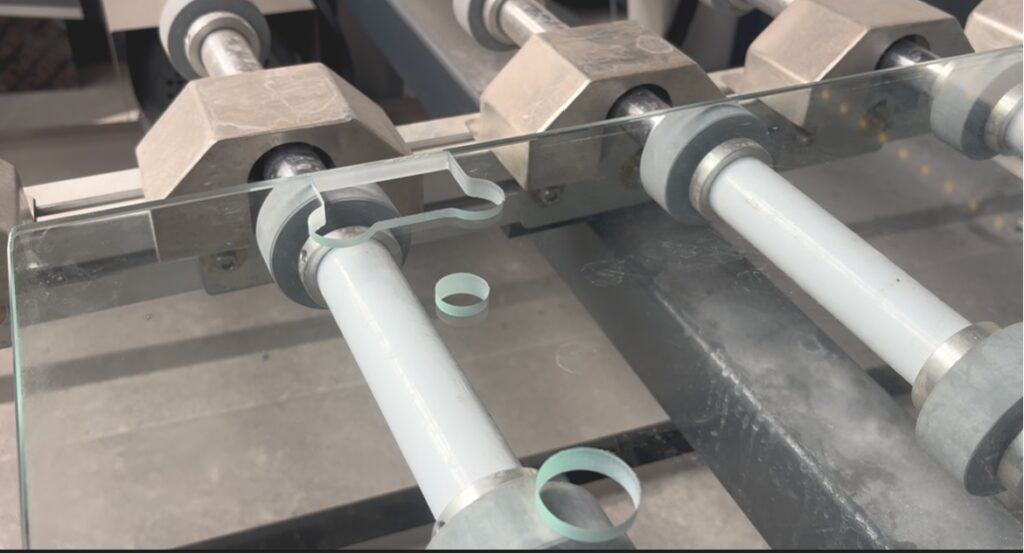
How can laser processing improve the production efficiency and quality of glass processing plants?
To lift a plant’s output for real, the gear must join a “smart” setup.
- Data-Driven Production:New laser units link deeply with business ERP tools. The unit scans bar codes or QR marks on its own. It pulls the right work settings and plan files right away.
- Real-Time Monitoring: Work data goes up live. This lets leaders check stock, steps, and success rates at once. It cuts worker slips. The make flow stays clear and trackable all the way.
- Global Standards and Reliability:Leading gear follows ISO 9001 rules and holds CE marks. This brings safety and fines to world markets. In addition, glass drilling technology integrated into the system ensures precision and efficiency across operations.
Conclusion
Moving to infrared laser glass processing marks a needed plan for makers eyeing top markets. It skips the costs of wear parts like tools. Non-touch work cuts break rates. Smart digital flows tie in well. All this gives a clear edge in the field.
For groups looking to enhance their manufacturing capabilities, BLM Automatic Machine provides a complete range of smart solutions. With the addition of cutting-edge laser centers, we combine professional research with a robust “24/7” support plan, ensuring seamless and reliable production. This commitment to innovation and continuous support guarantees smooth and efficient operations for your business.
FAQ
Q: Does laser drilling work on different types of glass, such as tempered or automotive glass?
A: Yes. Laser methods fit many types well. They serve home gear glass, car front shields, and slim tech glass often. BLM Automatic Machine can shape custom lines for set material depths and field needs.
Q: How does the precision of laser drilling compare to traditional CNC machines?
A: Laser drilling gives better steady results. It keeps size holds within ±0.01mm. As a light process, it skips “bit slip” or shakes from mechanical turns. Every hole lands just right.
Q: Is the maintenance of laser equipment more complex than that of traditional machines?
A: In several ways, it proves easier. No bits need sharpening or swap work. Less mechanical wear shows up. Care centers on light part cleans and soft updates. BLM Automatic Machine gives one-to-one site training. This makes sure workers handle it fully.
Q: Can these machines be integrated into my existing factory ERP system?
A: Absolutely. The gear fits the “Industry 4.0” time. It backs auto bar code scans to read work data. Links to your ERP allow live step tracking and data care.
Q: What is the after-sales support like if the equipment encounters an issue?
A: We run a “2-7-24” fix plan. It covers same-day checks, tech reach to your plant in 2-7 days, and fixing of usual issues in 24 hours. This holds your output loss small.