

Introduction
Cleaning glass holds a key place in making and handling glass items, particularly in areas that require accuracy and clarity. In fields such as building designs, vehicle parts, electronic devices, home items, and solar power, the quality of glass often depends on how clean it is. For instance, small bits of dirt on the glass can affect how well it sticks, gets coated, or looks.
These machines mainly work to clear away marks, greasy spots, dirt particles, and other unwanted substances from the glass surface. At the same time, they safeguard the protective layers on the glass, like those on Low-E glass. This helps keep the standard high for later steps, such as heating treatment, ink printing, or applying covers. Thus, an industrial glass washing machine serves as more than just a basic cleaner. It acts as an essential part of today’s glass handling setups. Such setups help preserve the item’s quality and keep the process steady.
Structure of Industrial Glass Washing Machines
Builders design industrial glass washing machine with several combined areas for fast output and exact work. The main parts consist of an initial cleaning area, a strong water jet setup, gentle bristle rollers, air blades or warming devices for drying, and a water purifying unit. All these elements team up to wipe out dirt from both sides of the glass.
You can use this equipment alone. Or, you can link it with edge-shaping tools, cleaning units, and more to build a full automatic production line. Fitting into production lines proves vital for smooth operation and better results. For example, BLM Automatic Machine has models that connect easily with drilling tools, edge systems, and robot helpers. This creates a completely automatic flow from cleaning to additional steps.
Working Principle of Industrial Glass Washing Machines
The function of an automatic glass washing machine usually follows a series of clear steps:
-
Loading: Glass moves into the machine through belt systems.
-
Pre-Rinse: It uses clean water to wash off big pieces of waste first.
-
Main Wash: Gentle brushes pair with powerful sprays to scrub both sides well.
-
Rinse: A follow-up wash gets rid of any soap leftovers.
-
Drying: Warm air blades or quick fans dry the glass without touching it.
Designers create these machines for hands-off use. They include speed adjustments and computer controls. Certain types add smart options, like code reading and business software links.
The water cleaning system forms another basic part of how well it works. By reusing purified water, it reaches strong drying results and spotless surfaces. This approach cuts down on water use and helps the surroundings.
Applications of Industrial Glass Washing Machines
Factories put industrial glass washing machines to work in many different fields:
-
Construction Industry: Glass washing machines play a big role in wall covers, frames, and entry panels. Spotless surfaces matter before heating or covering steps.
-
Electronics Industry: These help with display screens, touch surfaces, and lens glass. Glass washing machines remove tiny bits that might harm how things run.
-
Home Appliance Industry: Cleaning happens before ink work or design layers on parts like oven fronts and fridge covers.
-
Furniture Industry: This ensures sharp views and nice looks for table tops, storage units, and door glass.
-
Photovoltaic / Solar Glass Industry: Clean sheets boost light passage and power in solar panels.
People use it a lot in quick shaping and handling cases for electronic glass, such as OLED display panel glass and consumer electronics cover glass. It also fits photovoltaic glass, automotive glass, and special optical glass.
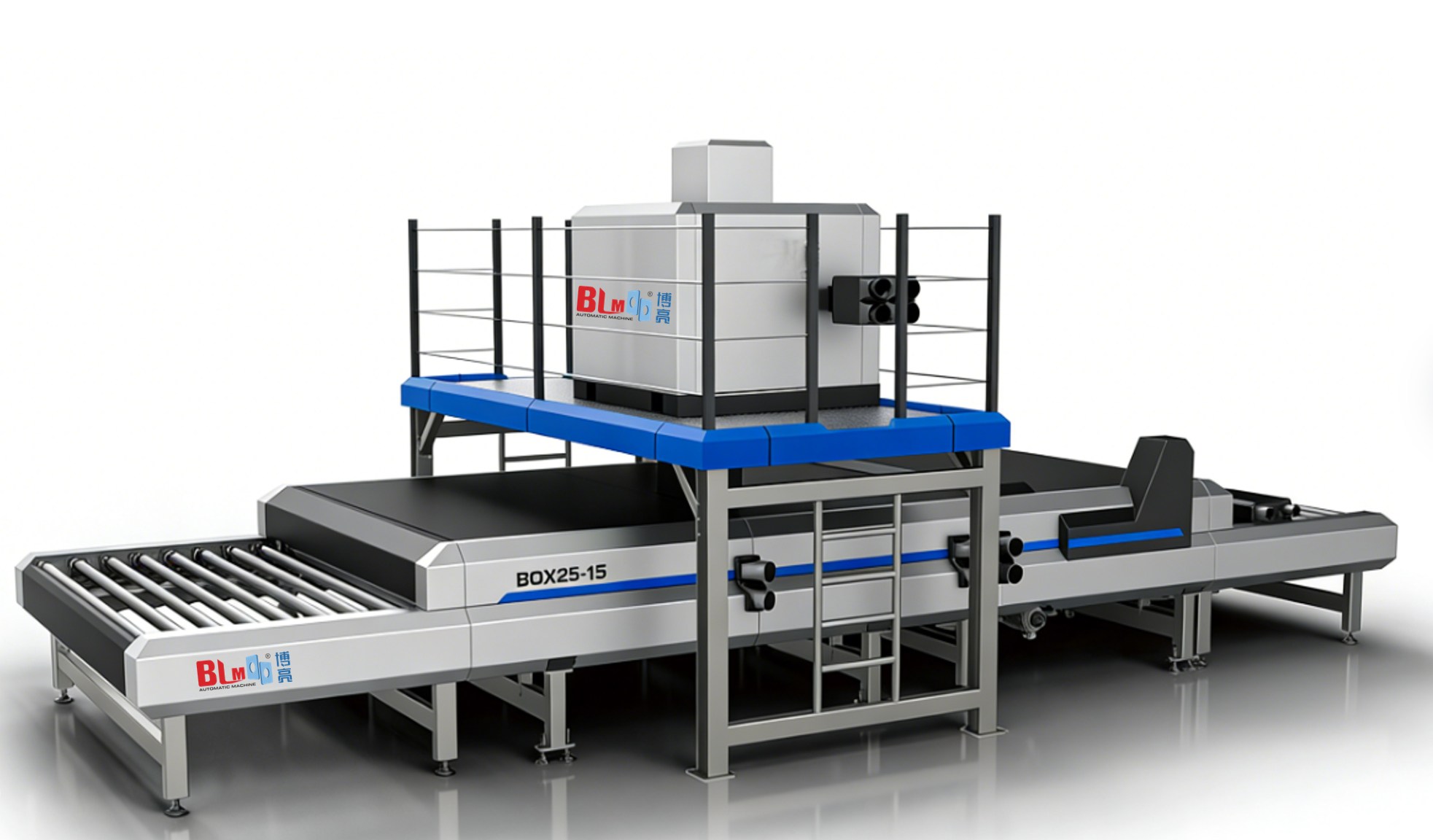
Key Considerations When Choosing an Industrial Glass Washing Machine
Working Width and Height
Needs for washing glass differ a lot based on the job. BLM Automatic Machine gives various choices:
| Modèle | Max Glass Width | Min Glass Size | Overall Size |
|---|---|---|---|
| QX1.6 | 1600mm | 300×300mm | 5500×3450×900±20 |
| QX2.5 | 2500mm | 300×450mm | 7710×3600×900±20 |
| QX3.6 | 3600mm | 450×450mm | 9710×4700×900±20 |
These choices handle items from tiny home panels to big building sheets.
Glass Thickness Range
Automatic glass washing machine of this type can process materials with a thickness ranging from 3 to 19 millimetres. This capability makes them compatible with standard flat glass, as well as specialised types such as laminated or coated glass. types.
Energy and Water Efficiency
Adaptability to various jobs and water reuse systems lowers the bills for power and supplies. Units like the QX2.5L Low-E model focus on guarding soft covers. These units do this while keeping good power savings through targeted warming parts.
Drying Technology
BLM adds both warm air blades and fan setups. Strong drying and clean finishes mean no water marks after washing. This stays crucial for covers and joining work.
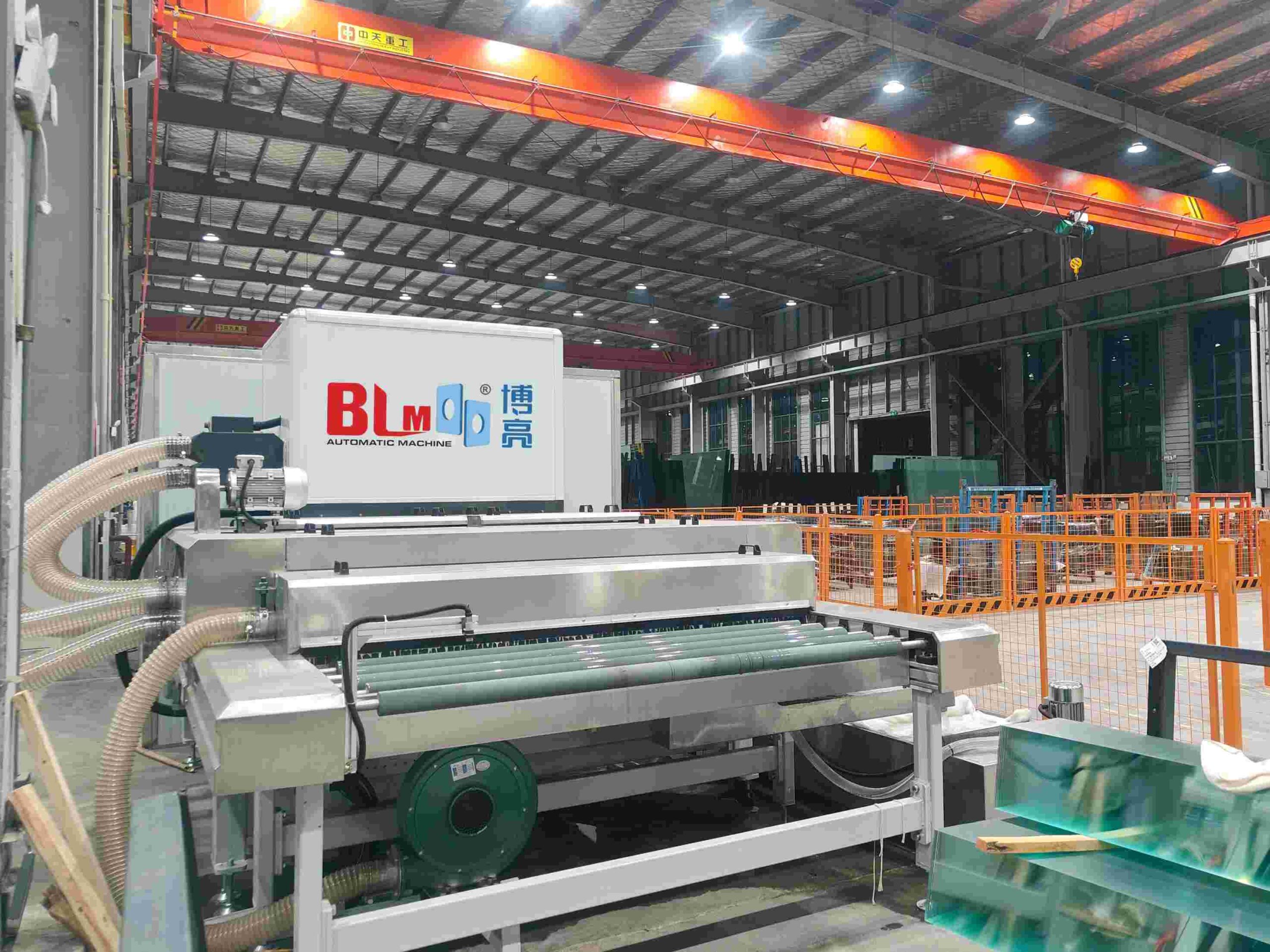
After-Sales Service and Maintenance
After-sales service and maintenance are essential for ensuring the stable operation of industrial glass washing machines and minimising unplanned downtime.
A commonly used support model is a multi-stage response system:
-
Remote support and initial diagnosis
Technical teams review error logs, perform basic checks, and provide remote troubleshooting guidance. Many issues can be identified and resolved at this stage. -
On-site technical assistance
If remote support is insufficient, service engineers are dispatched to the customer’s site. For distant locations, support arrangements are determined based on actual technical requirements. -
Time-based repair response
Standard maintenance procedures aim to resolve common faults within a short time frame, often within 24 hours, to reduce production disruption.
In addition, effective after-sales systems typically include spare parts availability, remote diagnostics, and multilingual technical support, helping maintain consistent equipment performance over the long term.
Conclusion
Industrial glass washing machines stand as must-have aids in current manufacturing settings. In these places, cleanliness ties directly to an item’s worth. Selecting a reliable glass washing machine manufacturer is crucial, as they provide equipment tailored to specific production needs and ensure ongoing technical support.With forward automation tools, wide use areas, and solid help from makers like BLM Automatic Machine, such systems deliver steady outcomes. They also lift results across many fields. No matter if you make solar panels or clever home screens, picking the best automatic glass washing machine can shift your work success.
FAQ (questions fréquentes)
Q: What is an automatic glass washing machine used for?
A: An automatic glass washing machine cleans flat glass areas by clearing dust, greasy marks, and leftovers before steps like covering, heating treatment, or ink printing.
Q: How do I choose the right industrial glass washing machine?
A: Look at things like top working width, thickness support, usually 3–19mm, power use, drying way, and fit with other making gear.
Q: Can these machines handle Low-E or coated glass?
A: Yes. It is mainly used to remove stains, oil stains, dust and other pollutants on the surface of glass, while protecting the glass coating layer (such as Low-E glass). BLM offers dedicated Low-E models with specialised brushes and water temperature controls.
Q: Are industrial glass washing machines easy to maintain?
A: Yes. Many models include self-cleaning functions and modular components for easy access. BLM also provides operational training and detailed maintenance manuals.
Q: Do these machines integrate with automated production lines?
A: Absolutely. This equipment can be used as a standalone machine or connected with edging machines, washing machines, etc., to form an automatic production line. Integration helps maximise productivity and reduce manual handling risks.