
Declining hole quality can leave a glass production team unsure whether to change a drill, clean the machine or call a technician. A maintenance routine should help separate those possibilities before another batch enters production. The practical priority is to control wet glass residue, verify lubrication delivery and record changes in tooling, positioning and machine signals.
Wet Glass Residue and the Motion System
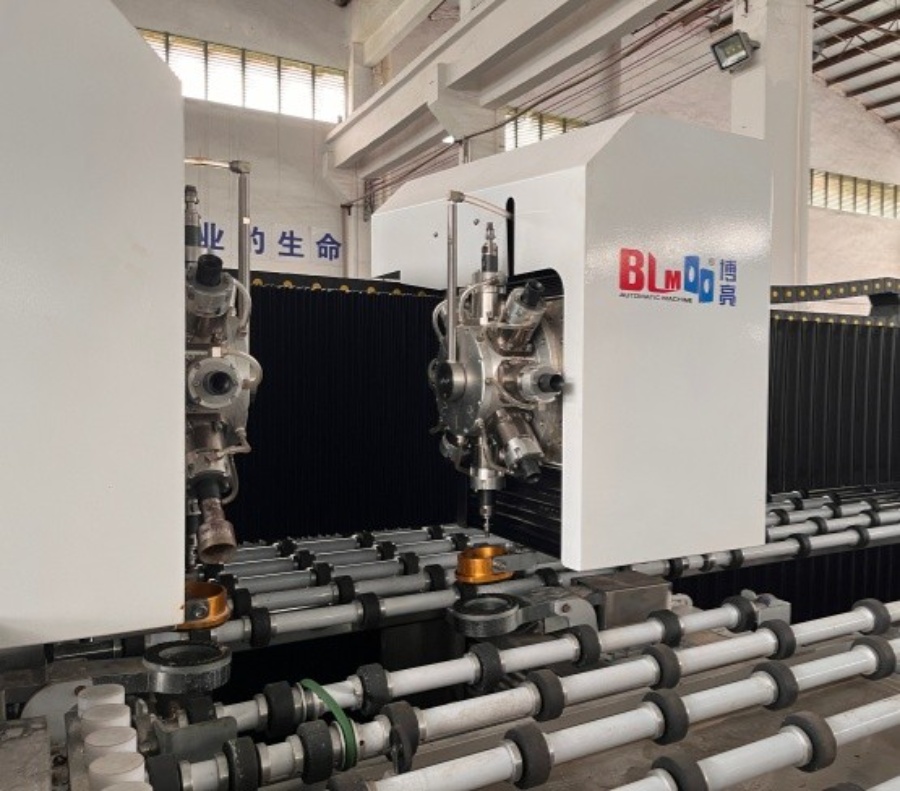
Contamination control connects everyday cleaning with reliable movement. Glass debris needs to be cleared from the table and water tank, while protective covers need attention wherever water could reach motion components. For a máquina de perforación de vidrio cnc, cleaning is therefore also an opportunity to spot a damaged cover, an emerging leak or a change in the glass contact surfaces.
Safe access comes before hands-on inspection. Trained, authorized personnel should follow the site’s energy-isolation procedure, control stored energy and verify isolation before intrusive cleaning or removing guards. A stopped cycle is not safe isolation. Observations made from the normal guarded operating position should remain separate from work that requires access to moving parts or electrical enclosures.
Protective details make the inspection more specific. BLM Automatic Machine’s A98(8X) uses Y-axis bellows and outer sealing plates to protect key components from water. Inspect their condition and attachments through approved maintenance access. If a cover is damaged, removing nearby debris alone does not resolve the opening through which water can enter.
Water leakage needs its own investigation. A leaking rotary joint or seal on the drilling assembly requires prompt technical attention. Record where the water appears and when it occurs, rather than treating every wet area as a lubrication fault. Keep electrical enclosures closed and report moisture or damaged external wiring to qualified personnel.
Automatic Oil Delivery Still Needs Verification
An automatic lubrication circuit reduces routine dispensing work, but its delivery still needs checking. The A98(8X) and A71X have oil circuits that supply lubricant regularly in measured quantities. A full reservoir or a running pump alone cannot establish that every required lubrication point is receiving oil. Leaks and blocked metering devices remain possible faults.
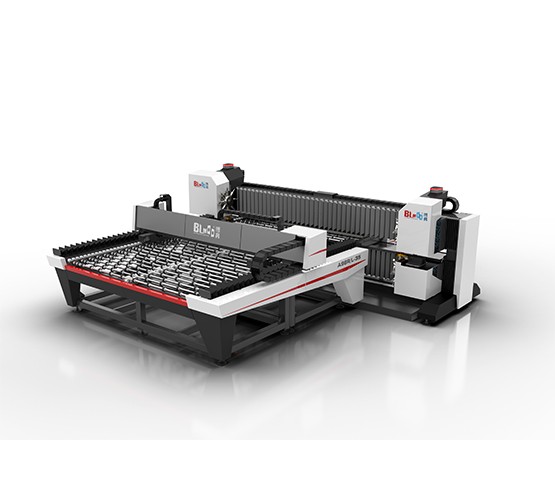
The installed configuration determines which components belong in the maintenance routine. An A98 equipped as a máquina de fresado de vidrio needs attention to both drilling and milling tooling.
The documented A98(8X) drilling-and-milling configuration includes a milling function in the Y1 head. Milling and polishing are configuration-dependent, so an A98 label alone does not establish which functions are fitted.
Lubrication checks should follow the approved circuit and maintenance instructions. Check reservoir level, visible leaks and the indicators actually fitted to the machine. Use the specified lubricant and dispensing settings. Where delivery is uncertain, have authorized maintenance staff verify the affected points through the approved procedure before releasing the machine for production.
Transmission lubrication and process-water checks serve different purposes. Oil delivery supports the relevant motion components; water-system inspection addresses the wet machining process and leakage.
Keep these observations separate in the maintenance log. Otherwise, refilling an oil reservoir may distract from an unresolved water leak, or a clean water tank may be mistaken for evidence of satisfactory lubrication.
Glass Contact Surfaces and Tool-Holder Condition
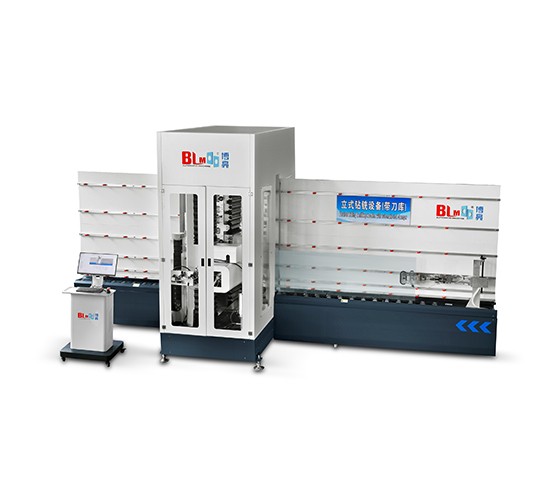
Clean motion components cannot compensate for neglected workholding. On the A71X máquina de perforación de vidrio vertical, a rack-and-guide-driven suction carriage positions the glass. During milling, two rows of vertical wheels press the glass. These contact areas deserve attention alongside the drilling and milling tools because their condition belongs to the same positioning and machining sequence.
Suction contact surfaces need inspection for debris and damage. Clean contact surfaces help prevent handling scratches, and damaged cups require attention through the applicable maintenance procedure. Inspect the supporting wheels as well. Record whether a quality change affects drilled holes, milled features or both on an equipped machine; this narrows the investigation without claiming a certain diagnosis.
The A71X uses a BT40 tool-holder interface with automatic tool change. Its holder capacity varies by model, so a check limited to the currently active tool can miss other occupied positions. The following counts describe holder capacity, not spindle count or maintenance frequency; the BT40 specification here applies to A71X.
|
A71X model |
Holder capacity |
Maintenance implication |
|
A71X(2515) |
6 x 2 holders |
Include every occupied position in the tool-holder check. |
|
A71X(3020) |
8 x 2 holders |
Extend the same check across the larger magazine. |
Tool-holder inspection should follow the installed changer’s instructions. Check for contamination, damage and abnormal engagement through approved access. If a holder does not seat or lock normally, keep that fault open for a qualified technician. Do not force a tool into position or continue production to see whether repeated changes clear the problem.
Fault Records That Support a Useful Diagnosis
A change in noise, movement or finish is evidence to investigate, not a diagnosis by itself. Record the affected head, tool and operation, together with the job and any visible leak. Compare observations with the machine’s established normal behavior. Avoid assigning every chipped hole to a worn bearing or every positioning error to a lubrication problem.
Control information can make that record more useful. The A98(8X) and A71X interfaces display input/output signals and alarms, while electrical component labels help identify the corresponding hardware. Preserve the alarm information for trained personnel and use the applicable electrical documentation. Do not force outputs, defeat guards or open a live cabinet to test a theory.
A Routine That Protects the Next Production Run
Maintenance becomes useful when an observation leads to a verified action. Tie the log to the machine’s prescribed schedule, operating hours and actual condition. Record what was cleaned, inspected or repaired, then complete the approved checks with guards restored before production resumes. Persistent leaks, abnormal movement or repeated alarms need resolution, not another undocumented reset.
Preguntas frecuentes
How often does a CNC glass drilling machine need maintenance?
Follow the installed machine’s maintenance schedule. Use operating hours, contamination and recorded condition to identify additional attention between scheduled tasks. A generic weekly or monthly interval cannot replace the manufacturer’s requirements.
Does automatic lubrication remove manual checks?
No. Reservoir condition, leaks and delivery still require the specified checks. Automatic dispensing does not prove that lubricant has reached every required point.
What should be checked when hole quality changes?
Record the affected tool and operation, then check tool condition, workholding and visible contamination through approved procedures. Compare the symptom with recent jobs before assigning a cause.
Which A71X tooling needs attention?
Include every occupied BT40 holder position and the relevant changer checks. Preserve the distinction between holder capacity and the number of tools actually installed.
When should a fault go to a technician?
Escalate unresolved leakage, abnormal engagement, repeated alarms and faults requiring electrical or mechanical access beyond the operator’s authorization. Keep the alarm and maintenance records available for diagnosis.