
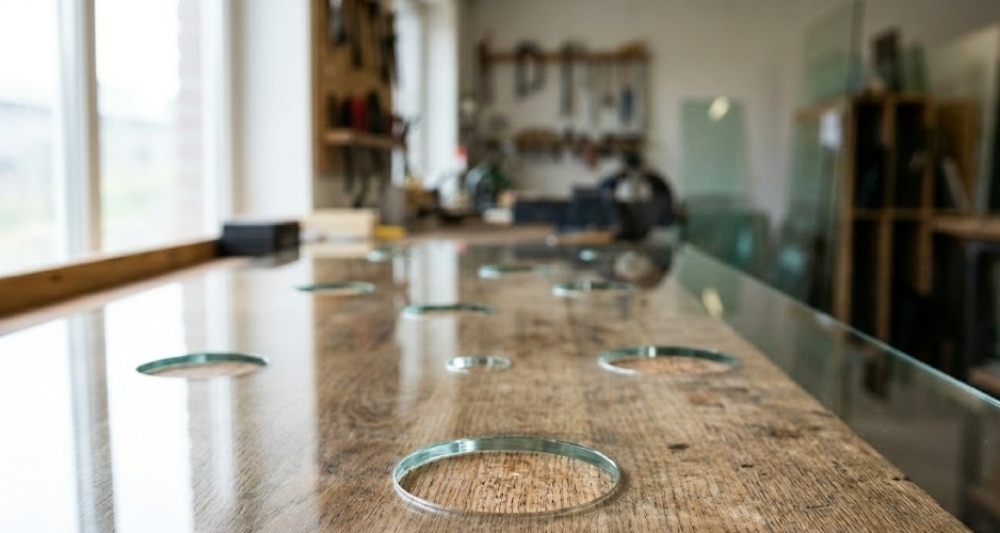
Drilling a hole in glass demands considerable skill along with suitable apparatus. Without careful execution, such work frequently produces fissures, broken borders, and spoiled substance. For obtaining superior, exact perforations in glass while safeguarding its wholeness, one needs to comprehend the fundamental mechanics, pick appropriate instruments, and adhere to meticulous drilling procedures. This manual leads readers through the method of drilling glass in a secure way, with effectiveness and expert-grade exactness.
Why is Glass Drilling So Challenging?
Common Problems: Cracking and Edge Chipping
In the course of drilling glass, typical difficulties like abrupt breakage from a single bit insertion or border flaking may arise. These troubles commonly originate from unsuitable advancement pace, instrument selection, or undue force. As a delicate substance, glass proves vulnerable to tension fissures, and such fissures readily form unless appropriate drilling parameters remain in place.
The Core Question: How to Drill a Hole in Glass Without Breaking It?
To accomplish effective drilling through glass, success hinges on regulating two fundamental elements: speed and tool selection. When concentrating on an optimal blend of these, individuals can guarantee that the glass stays undamaged, all while securing a neat, correct perforation. Advanced setups such as Máquina Automática BLM enter the picture here, providing refined exactness and pace regulation to support secure glass drilling.
Why Does Glass Shatter? Understanding the Physics of Drilling
Heat Stress from Friction
While the drill bit progresses within the glass, friction creates warmth. This focused warmth may prompt the glass to swell, forming tension spots that could result in fissures. Rapid paces or excessive force intensify this phenomenon, thereby causing breaks.
Vibration and Stress
Drilling apparatus without fine-tuned accuracy can bring about oscillations during the operation. Such oscillations convey tension to the glass, initiating small fissures. If the apparatus lacks firmness, then these tension breaks become more prone to extend, ultimately leading to total disintegration.
Precision Feed Speed: BLM’s Secret to Preventing Shattering
In order to lessen warmth accumulation and oscillations, BLM Automatic Machines uphold a feed speed range of 0-3mm/s, which serves as a reliable approach for managing the hazard of glass disintegration. Through this exact oversight of advancement pace, the tension imposed on the glass diminishes, thereby assuring security and exactness during hole creation.
What Tools Do You Need? Selecting the Right Glass Drill Bits
Diamond Core Bits for Clean, Accurate Drilling
Regarding drilling glass, diamond core bits represent the premier choice. These bits furnish outstanding exactness, resilience, and slight warmth production. Their capability to bore into glass absent fragments or breaks renders them indispensable in expert-level glass drilling.
Multi-Spindle Systems: Efficiency and Flexibility
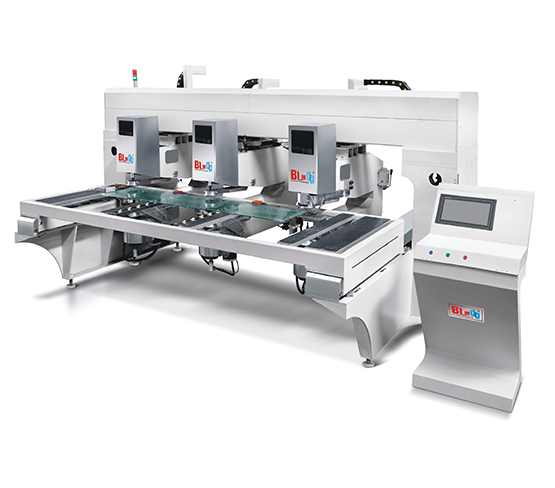
Within production settings handling substantial volumes, multi-spindle setups resembling the A22 model from BLM Automatic Machine hold preference. These units permit numerous drill bits to function concurrently, elevating productivity and sustaining elevated exactness over vast glass quantities. Moreover, by mechanizing the drilling method, these setups markedly decrease hands-on involvement, which fosters steadiness and curtails mistake potential.
BLM’s Cutting-Edge Drill Bit Suspension System
BLM Automatic Machines include a waterproof and oil-resistant drill bit suspension system, which bolsters instrument endurance and drilling reliability. This aspect guarantees prolonged tool service while upholding the soundness of the worked glass.
How to Drill a Hole in Glass with Pro Precision? (Step-by-Step)
Step 1: Positioning and Fixing the Glass
Prior to commencing the drilling procedure, it remains essential to situate the glass correctly upon a steady platform. BLM’s machines possess a dual-axis system (X and Y axis) that enables meticulous placement and firmness, thus confirming the glass holds position across the full drilling sequence. As a result, this arrangement lessens misalignment hazards and confirms precise perforation positioning.
Step 2: Set the Perfect Feed Speed (The 0-3mm/s Rule)
Overseeing the advancement pace holds vital importance for glass drilling. BLM Automatic Machines secure the advancement pace within the 0-3mm/s range. This gradual and regulated pace makes certain the drill bit approaches the glass softly, thereby averting undesired strains that might provoke fissures.
Step 3: Cooling and Lubrication Management
The act of drilling glass produces notable warmth, which may inflict harm unless addressed adequately. BLM machines arrive fitted with automatic cooling systems that preserve favorable warmth levels amid the drilling procedure. Furthermore, this cooling mechanism not only forestalls excess heat but also extends the durability of the drill bit and the glass alike.
Step 4: Precision Control: Penetration Without Damage
In avoiding border flaking and assuring exactness, it proves critical to regulate entry depth with care. BLM Automatic Machines provide dual-sided drilling systems that alleviate tension upon the glass, thus ensuring uniform treatment on each side of the perforation. Consequently, this capability yields neat, exact, and fracture-free perforations.
What Role Does CNC Automation Play in Drilling Quality?
From Manual to CNC: A Leap in Precision
Standard manual drilling approaches depend upon the handler’s proficiency and familiarity. Nevertheless, they remain susceptible to personal inaccuracies, which can yield irregular perforation sites or inconsistent depths. Conversely, CNC glass drilling machines, akin to those from BLM, utilize mechanized oversight frameworks to guarantee supreme exactness.
Smart Parameter Settings for Error-Free Drilling
Current CNC units, including those from BLM, come outfitted with smart parameter settings, permitting handlers to enter perforation depths, paces, and patterns straight into the unit’s oversight board. In this manner, it curtails personal inaccuracies and secures uniformity throughout each perforation crafted in a collection.
Multi-Spindle Systems for Increased Output
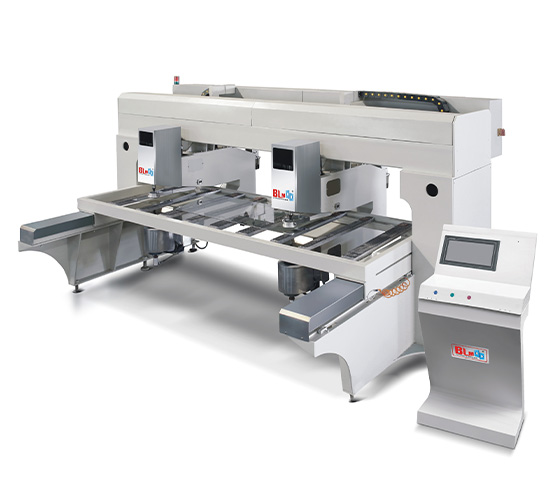
For sectors requiring handling of extensive glass amounts, multi-spindle units like the A22 or A23 models from BLM facilitate concurrent creation of multiple perforations, thereby substantially boosting capacity without forfeiting reliability.
Common Mistakes: Why You Are Still Failing to Drill Through Glass?
Too Much Pressure: Why Faster Is Not Always Better
Countless handlers commit the error of believing swifter drilling proves superior. Yet in practice, exerting surplus force or boring too hastily can bring about fissures and broken borders. Hence, upholding a steady, tempered pace remains crucial to confirm the glass endures intact.
Regular Tool Maintenance: Why Drill Bit Wear Matters
As time passes, drill bits inevitably erode, forfeiting their keenness and reliability. Should replacements not occur routinely, eroded bits may generate rough perforations or even induce glass fissures. Thus, sustaining instruments and substituting them when required holds importance.
Machine Stability: The Importance of a Solid Frame
Regarding fine-tuned drilling, the firmness of the unit itself serves as a cornerstone. Merely minor oscillations can induce flaws within the crafted perforation. BLM’s rigid machine frames are constructed to mitigate oscillations and sustain reliability, even amid prolonged manufacturing cycles.
Conclusion: Mastering the Art of Precision Glass Drilling
To drill a hole in glass safely and with precision, the essence resides in merging suitable instruments with a directed drilling method. BLM Automatic Machines, incorporating their meticulous advancement pace regulation, superior drill bits, and CNC mechanization, stand engineered to furnish the finest feasible outcomes, thus confirming that glass drilling endeavors persist as productive, secure, and of peak caliber.
For enterprises seeking to advance their glass drilling operations, committing resources to a CNC máquina de perfuração de vidro like the BLM series charts the optimal path. Featuring bolstered exactness and productivity, these units deliver the perfect remedy for realizing high-quality glass drilling while preserving scant refuse and curtailing manufacturing duration.
Ready to upgrade your drilling process? Investigate BLM Automatic Machines and uncover how our drilling machines for glass can aid in attaining prime outcomes with each perforation produced.
FAQ
What is the best tool for drilling glass?
A: When considering tools for drilling glass, diamond core bits emerge as the foremost selection. These bits supply notable exactness, resilience, and reduced warmth output, which effectively lessens the likelihood of fissures and fragments arising in the material.
How does BLM Automatic Machine prevent glass from shattering?
A: BLM Automatic Machines accomplish prevention of glass shattering through rigorous regulation of the advancement pace inside the 0-3mm/s range. This meticulous approach guarantees limited tension upon the glass, thereby blocking warmth buildup and oscillations, factors that predominantly trigger disintegration.
Can I use a regular drill for glass drilling?
A: Utilizing conventional drills for glass drilling carries strong discouragement. Such drills fail to offer the necessary exactness and resilience essential for producing neat, secure perforations. For achieving peak performance, dedicated diamond core bits become mandatory.
What is the importance of CNC in glass drilling?
A: The significance of CNC in glass drilling stems from its capacity to mechanize the entire procedure, thereby securing elevated exactness. It yields dependable positioning and depth for perforations, which in turn substantially diminishes inaccuracies attributable to human factors.
How do I avoid damaging glass edges when drilling?
A: In order to prevent harm to glass borders during drilling, one should employ a modest advancement pace, confirm diligent instrument upkeep, and incorporate dual-sided drilling mechanisms; these measures collectively work to diminish tension exerted on the glass.