
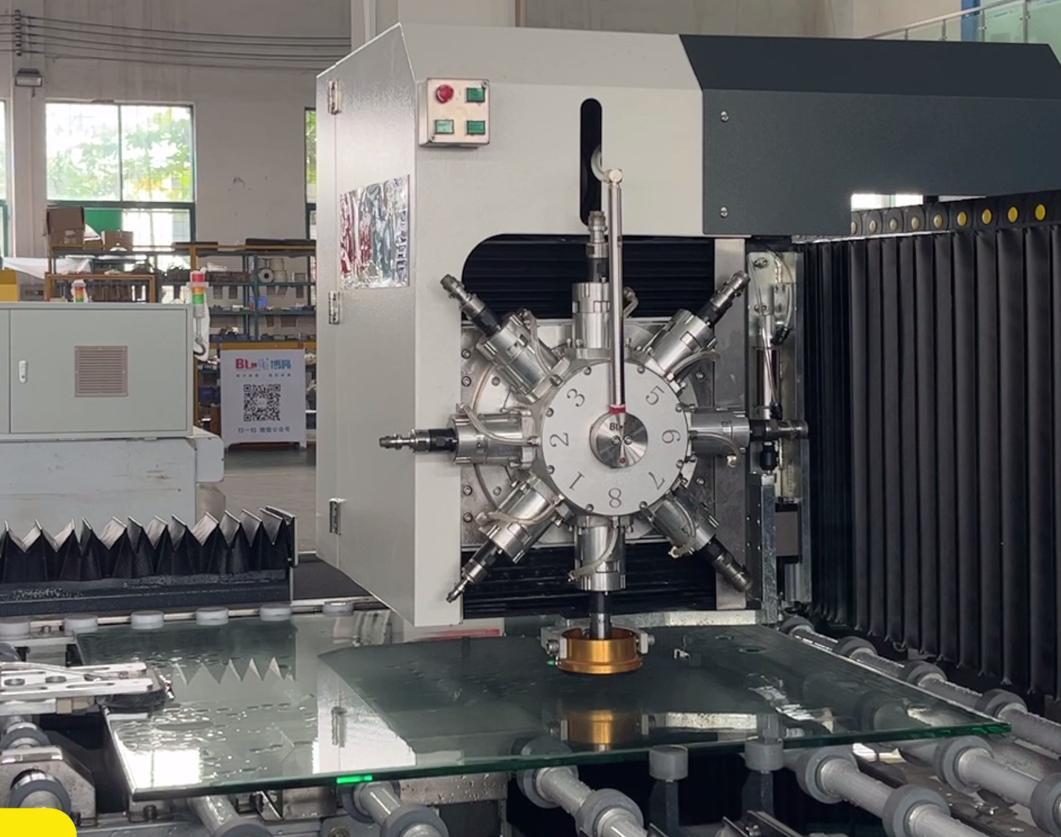
High-volume glass orders do not usually slow down because a drill bit takes too long to cut one hole. They slow down when every panel needs a different hole pattern, tool change, or handoff before the next operation can begin. The useful question for a production manager is therefore how to keep hole quality stable while reducing the waiting time between operations.
Where parallel drilling creates a real throughput gain
Parallel drilling earns its place when repeated panels carry several holes, multiple diameters, or a mix of holes and internal features. In those conditions, one station that completes more of the pattern per handling cycle can remove queues that otherwise build up around separate drilling and finishing steps. That is the practical value behind high-speed glass drilling: a steadier flow, not a speed figure taken in isolation.
Hole patterns matter more than sheet count
A high sheet count does not automatically justify a multi-spindle layout. A simple panel with one repeated hole may already flow well through a conventional station. The pressure rises when several hole diameters, countersunk features, or milled openings appear on the same panel, because each added operation creates another opportunity for a pause, re-clamp, or tool change.
- Repeated panels with several holes or several hole diameters
- Orders that combine drilling with milling or polishing work
- Production runs that need stable routing through downstream equipment
- Mixed batches where a prepared tool set avoids frequent manual changeover
Tool readiness keeps the line moving
Tool availability has a direct effect on output because a missing or slow-to-change bit turns a capable machine into a waiting station. BLM Automatic Machine’s A98 can carry 16 drill-bit types and uses a rotating tool magazine to position the required tool. That arrangement supports batches with different hole diameters without asking the operator to swap equipment for every change in the work order.
That is also why a стеклянная буровая и фрезерная машина should be assessed as a process cell, not only as a drill count. The useful configuration is the one that keeps the required tools close to the work, maintains positional consistency through tool changes, and passes the panel forward without creating a new manual checkpoint.
Matching the machine to the work envelope
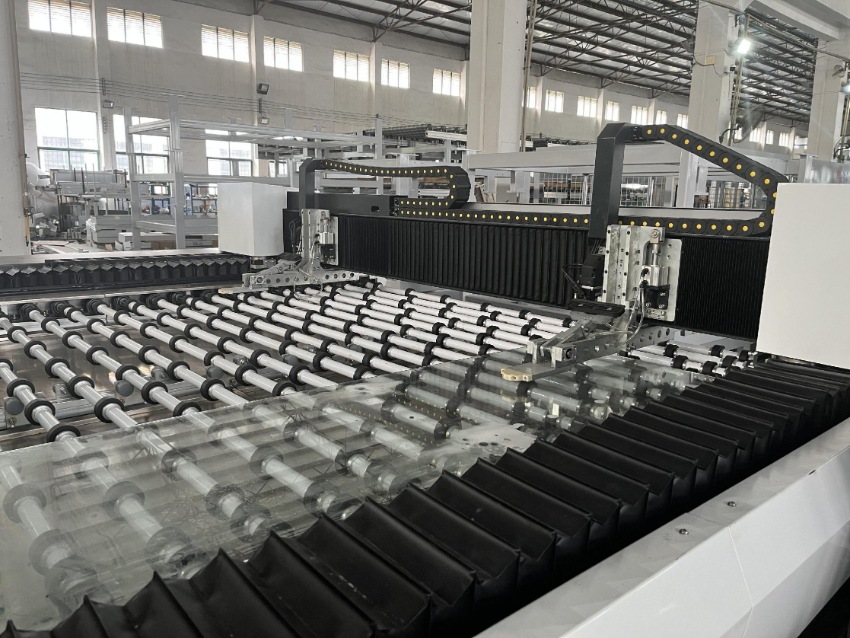
Capacity depends on whether the machine can accept the panel sizes and drilling range that dominate the order book. The A98 processes glass from 1,200 by 300 mm to 6,000 by 2,500 mm, with 4 to 19 mm thickness and drilling diameters from 6 to 50 mm. These limits matter because an otherwise fast process loses value when common jobs must be diverted to another station.
|
Production question |
What to confirm |
Why it affects output |
|
Panel envelope |
Typical length, width, and thickness |
Avoids routing common work to a second machine |
|
Hole program |
Diameter range and number of operations |
Shows whether the available tool set supports the batch |
|
Feature mix |
Drilling only or drilling plus milling and polishing |
Determines whether one handling cycle can replace several |
|
Line connection |
Edging, cleaning, and transfer sequence |
Prevents a faster drill station from feeding a new bottleneck |
Precision still sets the usable production rate
Output only counts when the panel can move to the next process without rework. прецизионное сверление стекла depends on stable positioning, appropriate tooling, and a process sequence that does not force repeated handling. In a multi-tool workflow, consistent tool-magazine positioning helps keep hole locations and diameters aligned as the program changes from one operation to the next.
For production teams, this shifts the conversation from maximum theoretical speed to reliable cycle time. A line that keeps the same hole quality across a long batch has more value than one that briefly runs faster but creates inspection delays, tool-related variation, or panels that need extra attention before downstream processing.
CNC drilling and milling in production terms
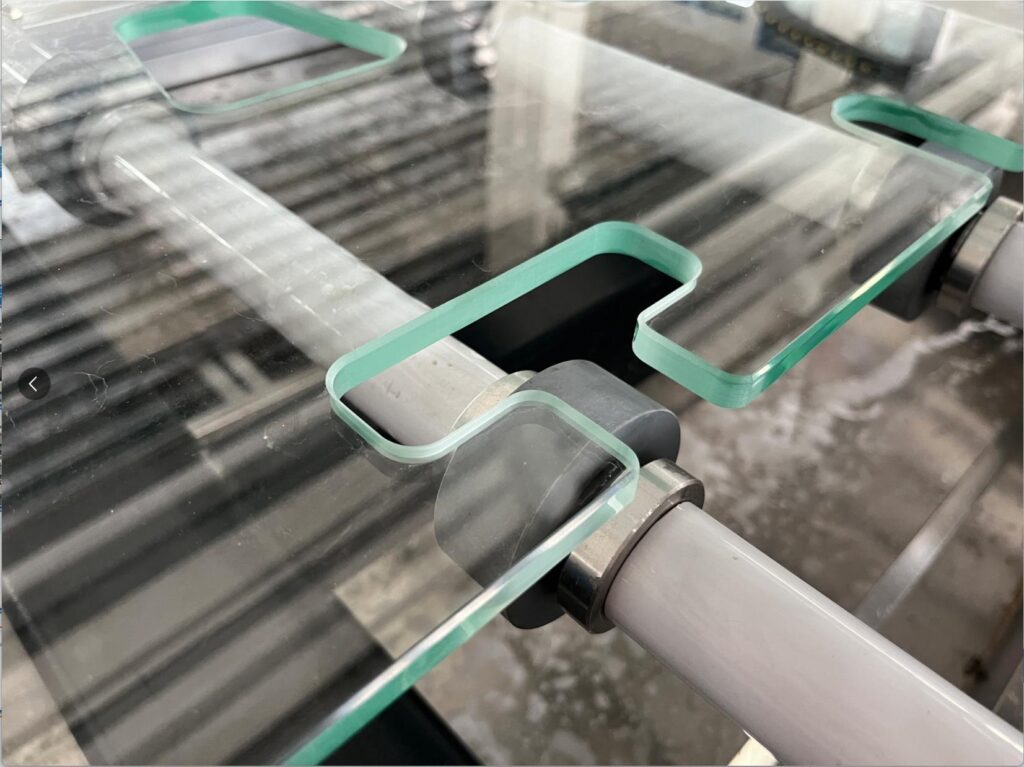
A useful CNC drilling and milling for glass explained in production terms is simple: the program should reduce avoidable movement between related operations. When drilling, milling, and polishing can be coordinated in one machine, the panel does not need to stop at a separate station merely because its hole pattern includes an internal cutout or finished feature.
This approach is especially relevant when the batch contains both routine holes and more demanding profiles. The A98 can be configured with a milling-cutter function, allowing drilling, milling, and polishing to be combined where the work requires it. The choice should follow the actual feature mix; adding capability that the schedule never uses will not improve output.
How the A98 fits a high-volume workflow
Once the production bottleneck is clear, a cnc drilling and milling machine for glass should be judged by how calmly it handles variation. The A98 can operate as a standalone machine or connect with edging and cleaning equipment. That gives a factory a way to match the machine’s role to its existing flow instead of treating automation as an all-or-nothing project.
BLM Automatic Machine’s role is most useful where the workflow needs multiple drilling tools, a defined panel envelope, and fewer handoffs between related operations. The aim is not to make every job look identical. It is to give recurring high-volume work a repeatable route so people can focus on exceptions instead of rebuilding routine setups.
The practical takeaway
Multi-spindle drilling improves output when it shortens the wait around a repeatable hole-and-feature pattern without compromising the next step in the line. Map the panel envelope, hole range, feature mix, and downstream handoff first. If those four points match the machine’s working range and tool strategy, parallel processing can turn a crowded drilling stage into a steadier production flow.
Часто задаваемые вопросы
Does multi-spindle drilling suit every glass order?
No. It is most useful when recurring work has enough holes, tool variation, or related features to make repeated handling and changeover a real constraint. Simple low-volume jobs may not gain the same benefit.
Can one machine combine drilling and milling?
Yes, when the machine is configured for both functions. Combining related operations can reduce handoffs, but the workpiece range and feature requirements should be checked before a production route is set.
What should a factory measure before adding capacity?
Measure waiting time between drilling operations, manual tool changes, re-handling, rework, and downstream queues. Those figures reveal whether the constraint is the drilling station itself or another step nearby.
Why does tool capacity affect cycle time?
A prepared tool set reduces the need to interrupt a batch when the required hole diameter changes. It also makes it easier to run a planned sequence of related operations without stopping for manual replacement.
Can a multi-spindle machine work in an existing line?
It can, provided panel transfer, upstream preparation, and downstream processes are matched to its role. A connection to edging or cleaning equipment should relieve a real flow constraint rather than simply move it farther down the line.