A drilling line can lose time even when every individual station is capable. The usual trouble is the handoff: glass arrives with residue, water, uncertain orientation, or an unclear work order, and the next station must decide whether to proceed. For line planners, the useful question is not simply whether to add washing, but where washing supports the drilling sequence without creating another unstable transfer.
The Line Decision Behind a Clean Surface
Washing should serve a defined production decision. A wash station before drilling can prepare incoming glass when surface residue or handling marks may interfere with support contact, identification, or visual checks. A wash station after drilling can remove process residue before the next finishing, inspection, or downstream handling step. The correct position depends on the problem the station is expected to prevent.
For a line built around a glass drilling machine, the first planning task is to draw the actual handoffs, not a generic equipment order. Track where a panel is loaded, how it is referenced, whether it changes orientation, and where moisture or debris can travel. This reveals whether cleaning solves a real interface issue or merely adds another transfer point.
What the wash station must protect
A useful wash station protects repeatability at the next station. It should support a stable handoff, give operators a clear condition to verify, and fit the factory’s panel flow. It should not become a substitute for sound drilling settings, correct fixtures, or a defined process route.
Panel condition at the transfer point, including visible residue and uncontrolled water carryover.
A consistent reference and loading direction for parts that have matching features or repeat orders.
A clear response when a panel does not meet the next station’s entry condition.
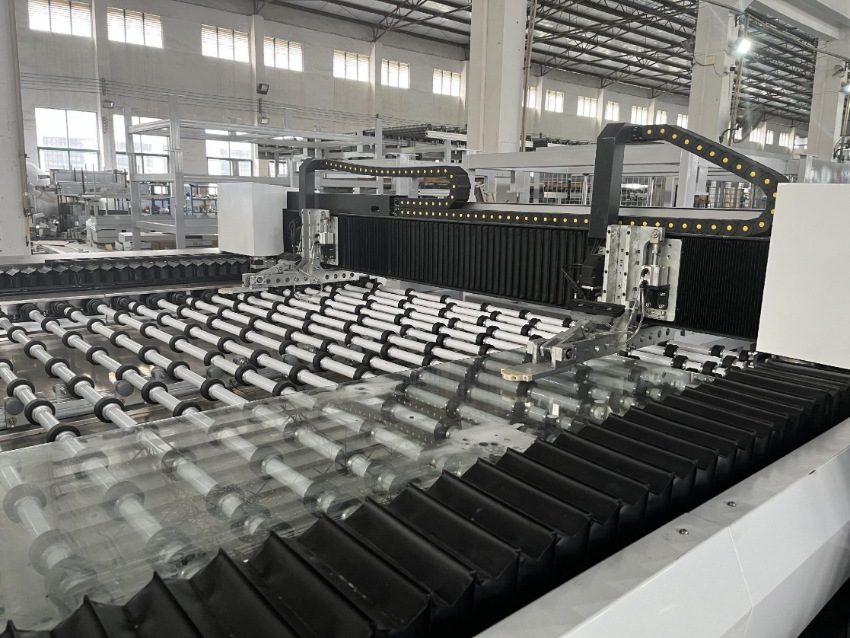
Before-Process Washing and Its Limits
Before-process washing is most valuable when the incoming panel condition is the variable that disrupts drilling or milling. The station can create a cleaner, more consistent entry point before the panel reaches supports, locating features, or a drilling head. That benefit is strongest when the line has a defined way to keep the panel dry enough and correctly presented for the next operation.
A before-process washer does not need to carry every responsibility in the line. If the main concern is tool selection, program identity, or panel positioning, the answer belongs in the process control around the drilling station. Separating those issues prevents a cleaning decision from becoming an excuse to overlook the actual source of variation.
The handoff checklist
A practical handoff is simple enough to be repeated during a busy shift. The team should agree on the panel’s entry orientation, acceptable surface condition, drying expectation, and action when a part fails that check. Those four points give a wash station a job that can be observed and improved.
Where a glass drilling and milling machine belongs in the flow
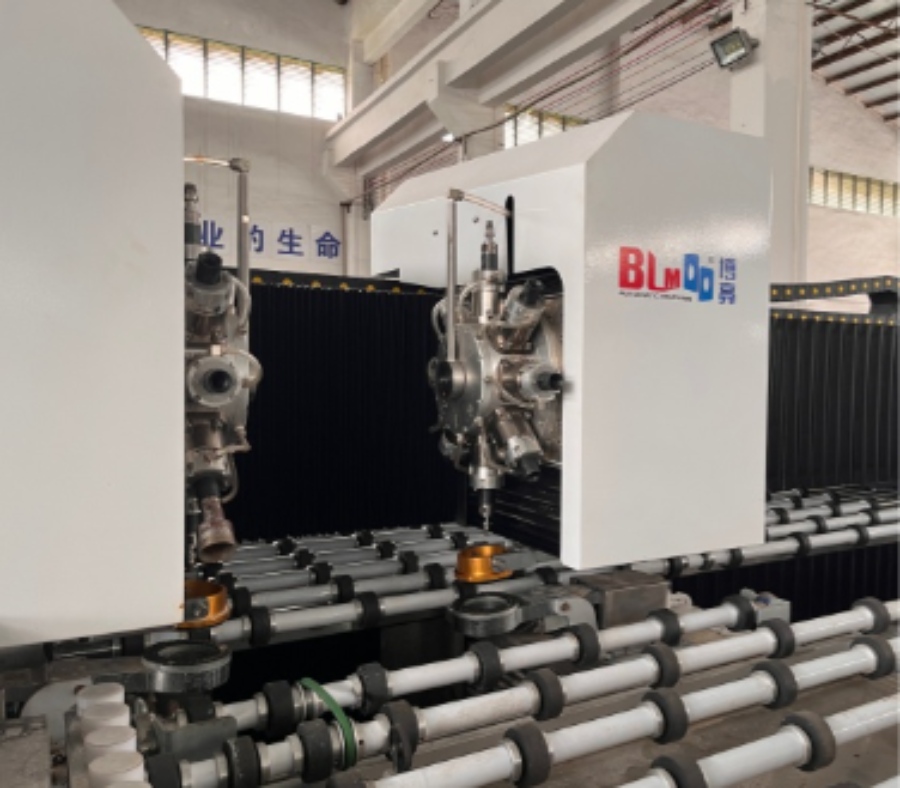
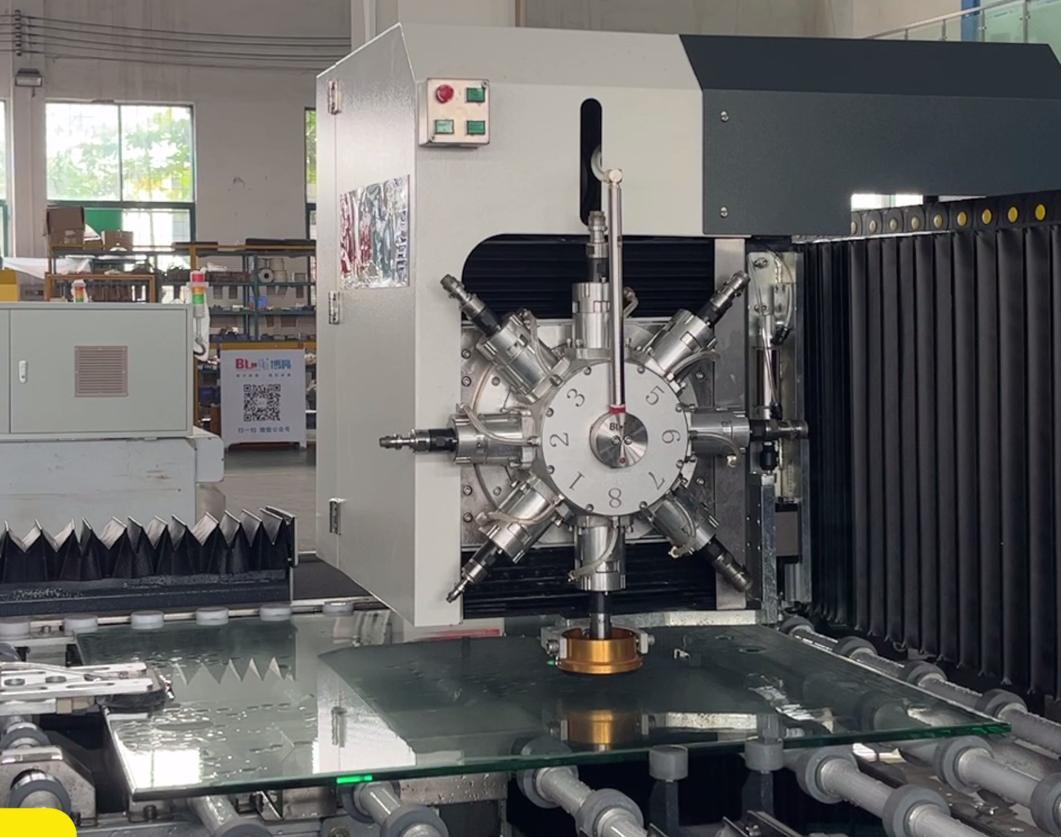
A connected drilling station should be placed where the panel can arrive consistently and leave without unnecessary reversal. BLM’s A98 can operate as a standalone unit or connect with edging and cleaning equipment, so its role can be planned around the actual line rather than around a fixed one-machine sequence. That flexibility is useful only when the surrounding stations share a common transfer logic.
The A98 combines drilling, milling, and polishing functions and can carry up to 16 drill-bit types at once. In a line with multiple hole diameters or feature changes, that capacity can reduce the need to move a panel between separate drilling machines. It does not dictate whether washing comes first or last; it makes the condition of the incoming and outgoing handoff more important to define.
| Line question | Before drilling or milling | After drilling or milling |
| Primary need | Remove incoming handling residue before reference-sensitive work. | Remove process residue before the next finishing or inspection stage. |
| Control point | Dryness, support cleanliness, and repeatable presentation. | Water carryover, edge condition, and clean transfer to the following station. |
| Planning risk | A washer cannot compensate for unstable positioning or an unclear work order. | A washer cannot repair a poorly drilled hole or an incomplete milling feature. |
Three Questions That Set the Sequence
The sequence should be set from the next operation’s acceptance condition. A panel that needs a clean, stable entry before drilling may justify washing upstream. A panel that needs residue removed before a later inspection or finishing stage may justify washing downstream. When both needs exist, planners should first prove that the extra transfer improves the line instead of adding avoidable handling.
For teams comparing a cam delme ve freze makinesi, the most useful question is whether its entry and exit conditions are visible and repeatable. A machine specification matters, but a clean transfer plan determines whether the specification can be used consistently across shifts.
A glass washing machine should therefore be evaluated as an interface station. Its value comes from the condition it creates for the next operation, not from a generic promise that more washing always improves the line.
For broader line planning, a cnc drilling and milling machine for glass should be considered alongside panel flow, cleaning purpose, and the decision points operators can actually verify.
A Practical Line-Planning Summary
Glass washing fits best where it protects the next process decision. Put it before drilling when incoming surface condition threatens stable presentation or verification. Put it after drilling when the downstream stage needs a cleaner panel. In either case, define the handoff condition, avoid redundant transfers, and keep drilling controls separate from cleaning controls.
Sık Sorulan Sorular
Should washing always happen before glass drilling?
No. Washing belongs before drilling only when it creates a defined, useful entry condition for the drilling operation. If the real need is to remove process residue before a downstream stage, washing after drilling may be more appropriate.
Can a washer solve hole-position problems?
No. Hole-position problems usually require a review of program data, panel reference, support condition, and machine movement. A washer can improve panel condition, but it cannot correct an incorrect process reference.
When is a post-drilling wash station useful?
A post-drilling wash station is useful when the next operation needs residue removed or a cleaner panel for finishing, inspection, or controlled handling. The next station should define the condition that the washer must deliver.
Does integrated drilling and milling reduce line handling?
It can. Combining drilling and milling in one station can reduce transfers between separate machines when those features belong to the same planned route. The surrounding washing and edging handoffs still need their own clear controls.
What should a factory review before changing the sequence?
Review actual panel flow, entry orientation, transfer surfaces, cleaning purpose, drying needs, and the acceptance condition for the following operation. A short observation of these points usually exposes the constraint that matters most.