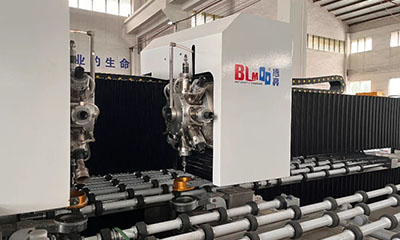
A crowded fabrication floor can make a capable machine look like the wrong investment. The real question is not simply whether a vertical or horizontal platform processes glass faster; it is whether the panel route, loading space, and surrounding equipment still let people move safely and keep work flowing. This guide compares the two layouts for plants that need drilling and milling without letting the machine become a bottleneck in the aisle.
The Layout Decision Begins With Material Flow
Floor area is only the visible part of a layout decision. A machine also needs usable infeed and outfeed zones, room for operators to load safely, tool-service access, and a route for finished panels to reach the next process. A стеклянная буровая и фрезерная машина from BLM Automatic Machine fits well when those movements are planned as one continuous path, not added around the equipment after installation.
Footprint Is More Than Equipment Dimensions
A vertical route concentrates the panel in an upright plane, while a horizontal route supports it across a table. That difference changes where the production line consumes width, how a panel enters the work zone, and where operators need clearance. For a vertical glass drilling machine, the important drawing is therefore the full panel path, including transfer points and the line equipment on either side.
Where Vertical Processing Earns Its Space
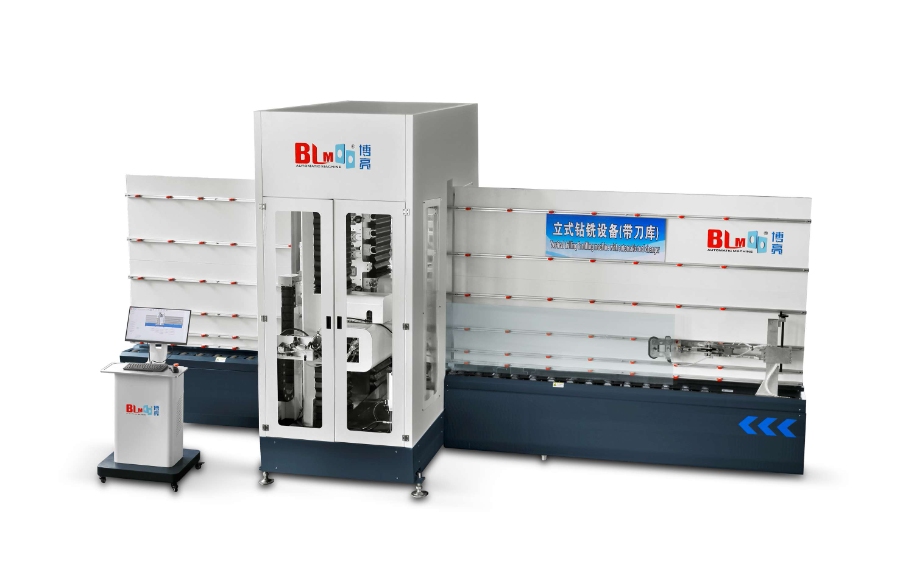
A glass vertical drilling and milling machine is most compelling when a plant already moves large panels through a vertical edging or washing sequence. The A71X keeps drilling, optional milling, and polishing in one vertical process. It can run as a stand-alone machine or connect with vertical edge grinders and vertical cleaning machines, so the panel does not have to be repeatedly shifted between incompatible orientations.
The Upright Line Changes the Handoff
The A71X is designed for large glass and uses automated conveying, CNC drilling, and intelligent controls. Its documented variants cover maximum glass sizes from 2500 × 1500 mm to 6000 × 3000 mm, with a 4–19 mm thickness range. Those figures do not replace a layout drawing, but they help a planner check whether the intended panel sizes and line direction belong together.
For teams seeking cnc drilling and milling for glass explained in layout terms, the useful distinction is simple: vertical processing can reduce lateral sprawl when the surrounding line is already upright. It is not automatically the smaller project, because the full infeed, outfeed, guarding, and service envelope still matter.
When Horizontal Capacity Deserves the Floor Area
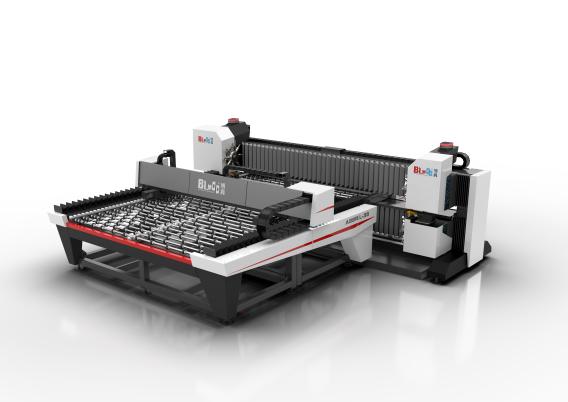
A horizontal platform becomes sensible when the work mix benefits from a broad supported table and rapid changes among different hole patterns. The A98 is a cnc drilling and milling machine for glass that can hold 16 drill-bit types at once, allowing different diameters to be selected without frequent equipment changes. That flexibility supports multi-specification batch and scattered work, but it asks the plant to reserve a substantial table zone and clear operating access around it.
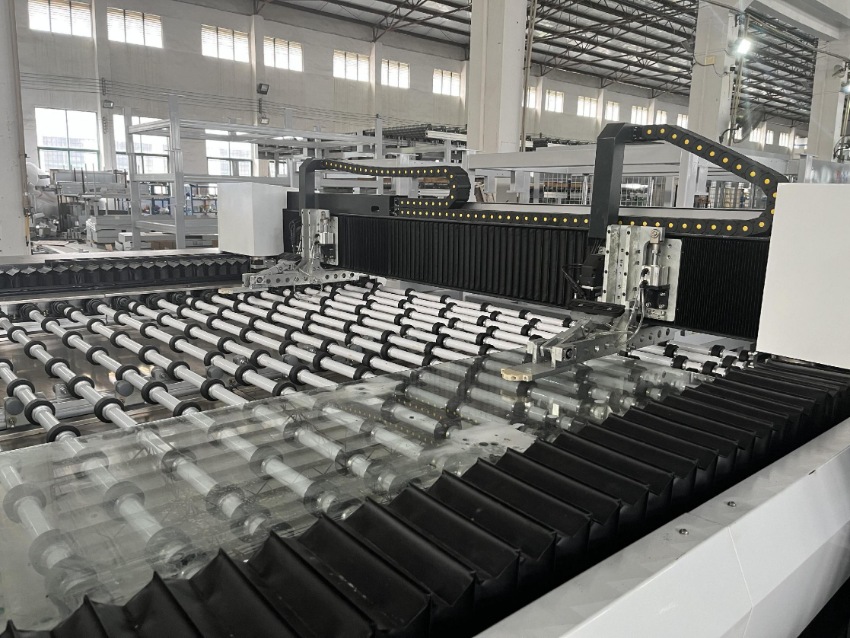
The published A98 overall size is 13,700 × 5,600 × 1,800 mm, before the additional clearance required for loading, unloading, maintenance, and material handling. Its processing range reaches 6000 × 2500 mm, while the minimum glass size is 1200 × 300 mm. These dimensions make horizontal processing practical where wide, open floor space supports the panel route; squeezing it into a narrow line merely moves the congestion to the transfer points.
A Floor-Plan Comparison That Avoids False Savings
A smaller-looking machine is not always the more efficient choice. The right layout is the one that leaves a clean handoff before and after processing, keeps the glass stable through the work zone, and gives maintenance staff practical access without disrupting production.
|
Layout question |
Vertical route |
Horizontal route |
|
Panel movement |
Panels travel upright through an in-line process. |
Panels remain supported across a broad horizontal work area. |
|
Best spatial fit |
Long, narrow production lines with compatible vertical equipment. |
Areas that can reserve a large table zone and access around it. |
|
Main planning check |
Confirm infeed, outfeed, and safe panel transfer along the line. |
Confirm table clearance, handling paths, and mixed-job staging space. |
Three checks keep the comparison grounded:
Measure the whole route, including racks, transfers, guarding, and operator walkways.
Match the machine orientation to the equipment that already defines panel movement.
Reserve service access before committing to a nominal equipment footprint.
A vertical glass drilling machine can save lateral space in a compatible line, but it should not be selected on width alone. Conversely, a horizontal table can make complex, varied work easier to stage, yet its advantages disappear when operators and panels compete for the same narrow aisle. The choice should follow the most constrained movement in the plant, not the most impressive specification on a brochure.
The Practical Takeaway
For a tight, line-based plant, vertical processing is usually the stronger starting point when panels can stay upright through adjacent operations. For a shop with enough open area and a varied flow of large-format or mixed-hole work, a horizontal platform can justify its wider footprint. Map the actual panel journey first, then confirm machine sizes, clearances, and handoff points against that route. The outcome is a layout that supports output instead of creating a new traffic problem.
Часто задаваемые вопросы
Does a vertical machine always need less factory space?
No. It often uses space differently by keeping the panel upright, but infeed, outfeed, guarding, and service access still need to be planned. The advantage is strongest when the surrounding processes use the same orientation.
Which layout works better with vertical washing and edging equipment?
A vertical drilling and milling route usually creates the cleaner handoff because panels can remain upright between compatible machines. Confirm the transfer dimensions and safe access zones before treating that compatibility as a finished line design.
Can the A71X handle large glass panels?
Yes. The A71X range includes versions for maximum panel sizes from 2500 × 1500 mm up to 6000 × 3000 mm. The correct version depends on the actual panel range and the line layout.
Why does a horizontal layout need extra clearance?
The table footprint is only one part of the working area. Panels, loading equipment, operators, maintenance tasks, and downstream handling all need room around the machine to prevent the work zone from becoming congested.
Should floor space be the only selection criterion?
No. Floor space must be considered with panel sizes, process sequence, product mix, and safe material movement. A slightly larger footprint can be worthwhile when it removes awkward transfers and keeps production flowing.